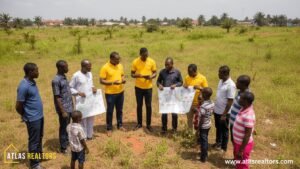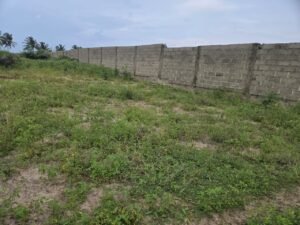

Remote property monitoring in Nigeria is how diaspora owners keep track of land or property they can’t physically visit; through scheduled site inspections, dated photo and video evidence, and a verified local contact who reports back on the property’s true condition. If you bought land in Lagos years ago through a Lagos Real Estate Realtor and haven’t set foot on it since, this is the system that closes the gap between owning property and actually knowing what’s happening on it. It’s also the single most overlooked part of diaspora real estate investment Nigeria which everyone talks about the purchase, almost nobody talks about what happens after. If any of this sounds familiar, the fastest way to find out where you stand is to Book a Consultation and have someone check your property this month, not next year.
Why Diaspora Owners Lose Touch With Their Own Land
Most diaspora buyers purchase land during a single trip home, sometimes through a relative, sometimes through an agent met once and never seen again. After the papers are signed, distance and daily life abroad take over. Months become years. There’s no system in place to check on the property, so the owner simply doesn’t know whether it’s been developed, fenced properly, encroached on, or quietly disputed until something forces the issue, usually a phone call from a worried neighbor.
This isn’t a rare situation. It’s the default outcome of buying land without a monitoring plan attached to it. A large share of the frustration diaspora clients bring to conversations about property scams in Lagos doesn’t actually happen at the point of purchase, it happens years later, when nobody checked on the land in between. The purchase itself was fine. What was missing was everything after.
Think about how many other assets you’d never treat this way. Nobody buys a car and parks it somewhere unseen for five years without expecting problems. Nobody opens an investment account and never checks the statement. Yet land often one of the largest single purchases a diaspora family makes is routinely left unattended for years at a time, simply because visiting Nigeria isn’t as easy as logging into an app. That gap between how carefully people manage other investments and how loosely they manage Nigerian land is exactly what remote property monitoring in Nigeria is designed to close. If it’s been years since you’ve had any real contact with your plot, it’s worth reading our full guide on how to reconnect with land you bought years ago from abroad before assuming the worst or doing nothing at all.
The reality is that real estate scams in Lagos Nigeria evolve. A plot that was clean and undisputed at purchase can attract encroachment two or three years later if nobody is watching it. Fraud isn’t always a single dramatic event sometimes it’s a slow erosion of ownership that only becomes visible when someone finally goes to look.
The Diaspora Journey Is Not the Same Everywhere
Diaspora buyers don’t all face this problem the same way, because their circumstances abroad are different. Someone working long shift patterns and trying to buy property in Nigeria from the UK has a different visiting rhythm than someone managing the currency and logistics of trying to buy property in Nigeria from Australia, where the distance alone can mean years between visits. A buyer looking to buy property in Nigeria from Canada may be juggling winter work schedules that make a Lagos trip difficult to plan more than once every few years, while someone trying to buy property in Nigeria from Dubai might be closer geographically but still constrained by work visa conditions that limit how often they can leave. And for the largest diaspora population, those looking to buy property in Nigeria from the USA, the combination of time zones, cost of flights, and family obligations abroad often means a property purchased in Lagos goes unseen for three, four, even five years at a stretch.
What all of these buyers have in common is that they need a diaspora real estate broker in Nigeria who understands that the relationship doesn’t end at the point of sale. Whichever country you’re calling from, the underlying need is identical: someone physically present in Lagos who checks on your investment on a schedule you don’t have to remember to set.
How Do I Know If My Land Has Been Encroached On?
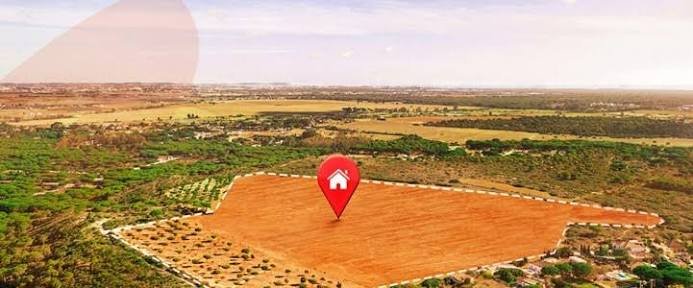
Warning signs include unexplained structures or fencing appearing on the plot, a caretaker or neighbor who goes quiet when asked for updates, missing or shifted survey beacons, and difficulty locating your own title documents when you actually need them. The only reliable way to know for certain is a physical site visit with photo and GPS-verified documentation not a phone call and secondhand reassurance.
This is closely tied to the broader question of land documents in Lagos and whether they’re being kept current. A Certificate of Occupancy or Governor’s Consent that was valid at purchase doesn’t monitor itself. If a dispute or encroachment claim is filed against your property and you’re not aware of it, you can lose valuable time responding, sometimes enough time for a claim to harden into something much harder to reverse. For a full breakdown of what to watch for and how these claims typically start, see our dedicated guide to land encroachment risk for diaspora owners.
What Does a Property Update Report Include?
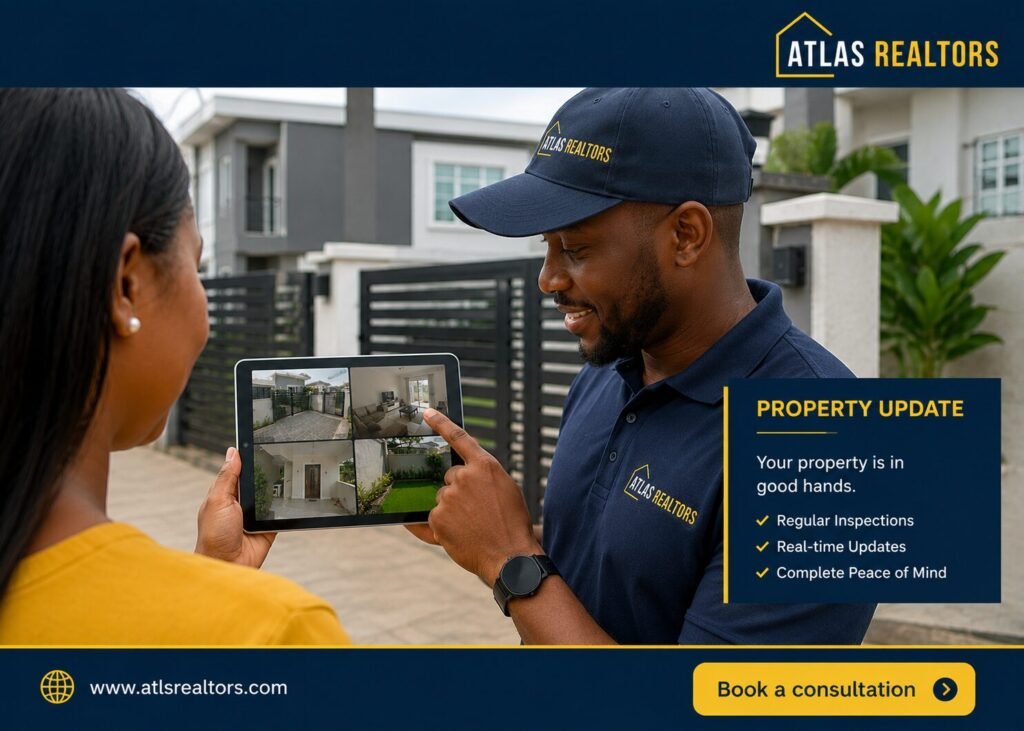
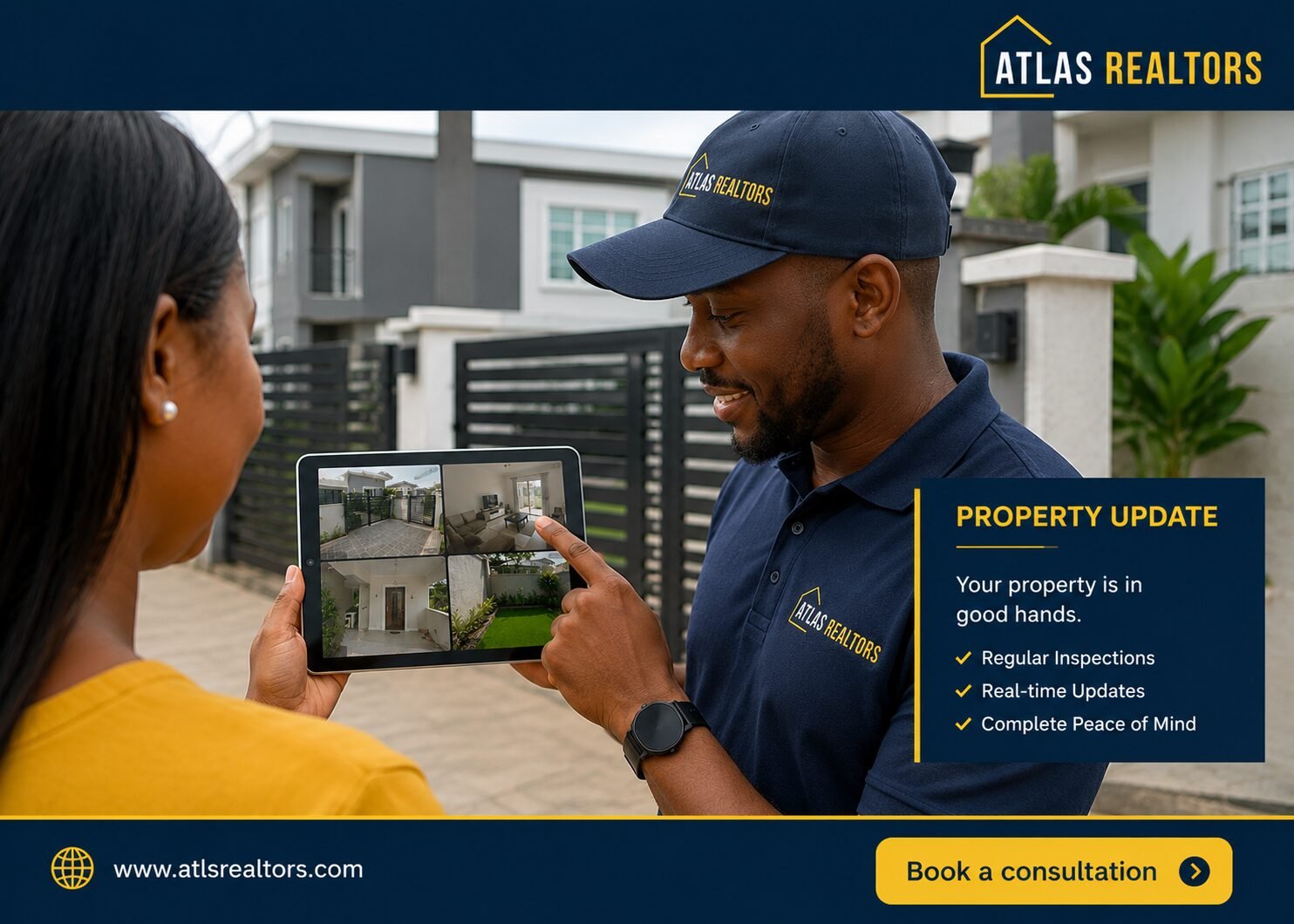
A proper property update report includes recent dated photos or video of the plot, GPS coordinates confirming the exact visit location, the physical condition of any fencing, beacons, or structures, and a written note on anything that’s changed since the last visit, new construction nearby, signs of trespass, or early indications of a boundary dispute. This is really an extension of Our Due Diligence process, just applied after the purchase instead of before it. The instinct to verify shouldn’t stop the day the deal closes.
Diaspora owners should expect this kind of reporting on a fixed schedule, not only when something has already gone wrong. Waiting for a problem to surface before checking on your property means you’re always reacting instead of preventing. For a sample breakdown of exactly what a compliant report should contain, see what a property update report should look like for diaspora owners.
Choosing a Trustworthy Caretaker for Your Property While Abroad
Look for a caretaker who is independently verifiable, not someone recommended solely by the person who sold you the land. Ask for dated photo evidence rather than verbal reassurance over the phone, and insist on a fixed reporting schedule rather than updates that only arrive when you ask for them. Where possible, cross-check their reports against a second, independent site visit at least once a year.
This is where working with an established Lagos Real Estate Realtor makes a real difference, because the monitoring isn’t dependent on one individual’s goodwill — it’s a documented process. Whether your land sits near a real estate broker in Lekki Lagos territory or closer to a real estate broker in Ikeja Lagos coverage area, the principle is the same: monitoring needs to be systemized, not left to informal favors between family friends. Our companion guide on choosing a property caretaker in Nigeria walks through the exact questions to ask before you hand anyone that responsibility.
Location Matters: Why Ajah and Lekki Owners Face Different Risks
Where your land sits affects how urgently you need a monitoring system. If you buy land in Ajah, you’re buying into one of the fastest-growing corridors in Lagos, which means the surrounding Ajah land price environment is shifting quickly and fast-appreciating areas tend to attract more encroachment attempts, not fewer. Anyone asking is Ajah a good place to buy land should hear the honest answer: yes, but growth corridors need more monitoring, not less, precisely because they’re desirable. The same logic applies to anyone browsing current Ajah land for sale listings, the appeal that makes a plot attractive to you makes it attractive to opportunists too.
Comparing corridors matters here. A breakdown of Lekki vs Ajah vs Ibeju-Lekki shows real differences in development pace, infrastructure, and risk profile between the three. If your land sits in an area with fast-moving land prices in Lekki Lagos, or you’re weighing the cost of buying a property in Lekki against other corridors, that same appreciation curve is exactly why ongoing monitoring pays for itself. For a wider view before deciding where to invest next, it’s worth reviewing the best areas to buy land in Lagos rather than assuming one corridor’s risk profile applies everywhere.
Can I Set Up Remote Monitoring Before I've Had Any Problems?
Yes and this is the ideal time to do it. Remote monitoring works best as a preventive habit, not a reaction to a problem already discovered. Owners who set up scheduled visits and reporting from the start rarely face the “stranger to my own land” situation that affects owners who go years without any contact with their property.
The Regulatory Backbone Behind Land Ownership in Nigeria
Diaspora owners are sometimes surprised to learn how much formal infrastructure already exists around land governance in Nigeria — the challenge is usually accessing it from abroad, not the absence of it. The Lagos State Lands Bureau maintains official records of registered land transactions and offers digital search and verification services that any owner or their representative can use to confirm title status directly with government records. Professional standards for the surveyors and valuers who inspect and value property are set nationally by the Nigerian Institution of Estate Surveyors and Valuers, which regulates the profession under federal law. At the federal level, the Federal Ministry of Housing and Urban Development has been actively working with international partners to modernize land registration and titling nationwide, a sign that formal record-keeping in Nigeria is moving toward, not away from, transparency.
There’s also a financial layer diaspora owners should understand. The Central Bank of Nigeria continues to reform how funds move between diaspora communities and Nigeria, which affects everything from how you fund a caretaker’s monitoring fees to how you eventually repatriate proceeds if you sell. And for owners who want direct engagement with government on diaspora-specific matters, including remittance and property questions, the Nigerians in Diaspora Commission exists specifically to serve that population.
What About the Risk of Fraud While I'm Not Physically Present?
This is the right question, and it deserves an honest answer rather than false reassurance. Distance is exactly the condition fraudsters rely on. The FBI’s Internet Crime Complaint Center has documented that real estate-related investment fraud remains one of the most damaging categories of financial crime, much of it targeting people who can’t easily verify what’s happening on the ground themselves. This isn’t unique to Nigeria — it’s a global pattern wherever an owner is physically removed from an asset. The practical defense is the same everywhere: independent verification that doesn’t rely solely on the word of whoever is managing the property day to day.
This is precisely why buying property in Nigeria from abroad needs to be paired with an ongoing verification habit, not treated as a one-time event. Our Due Diligence process doesn’t end at closing but it continues for as long as you own the property, because the risks don’t stop either.
Land registration in Nigeria has historically been slower and more paperwork-heavy than in many comparable markets, a gap that World Bank housing finance research has documented in detail. This is part of why formal, documented monitoring matters even more here than in markets with faster digital verification systems. Knowing this isn’t meant to discourage diaspora investment but it’s meant to explain why a monitoring system is a genuine safeguard, not an upsell.
The Real Cost of Not Monitoring Your Property
It’s worth being direct about what neglect actually costs, because the number is rarely small. Recovering a plot from an encroachment claim can mean legal fees, survey re-verification, court time, and months of delay — often adding up to a fraction of the property’s value that could have been avoided entirely with a handful of scheduled site visits over the same period. Compare that to the cost of ongoing monitoring, which is typically a small recurring fee, and the math becomes obvious. Prevention is consistently cheaper than recovery, yet most diaspora owners only calculate this after something has already gone wrong.
There’s also a quieter cost that doesn’t show up on any invoice: the erosion of trust in the investment itself. Owners who’ve been burned once, or who’ve heard enough stories from others in their diaspora community, often become reluctant to invest further in Nigerian real estate at all even when the underlying opportunity is still strong. That hesitation is usually rooted in one missing habit, not a flawed market. Our Due Diligence philosophy treats the pre-purchase check and the post-purchase check as two halves of the same responsibility, because an investment that isn’t monitored is, in a real sense, an investment that isn’t finished being protected. If you’re unsure whether your existing property has been checked recently, that uncertainty itself is worth resolving, Book a Consultation and get a clear answer rather than continuing to guess.
How ATLAS Realtors Solves This
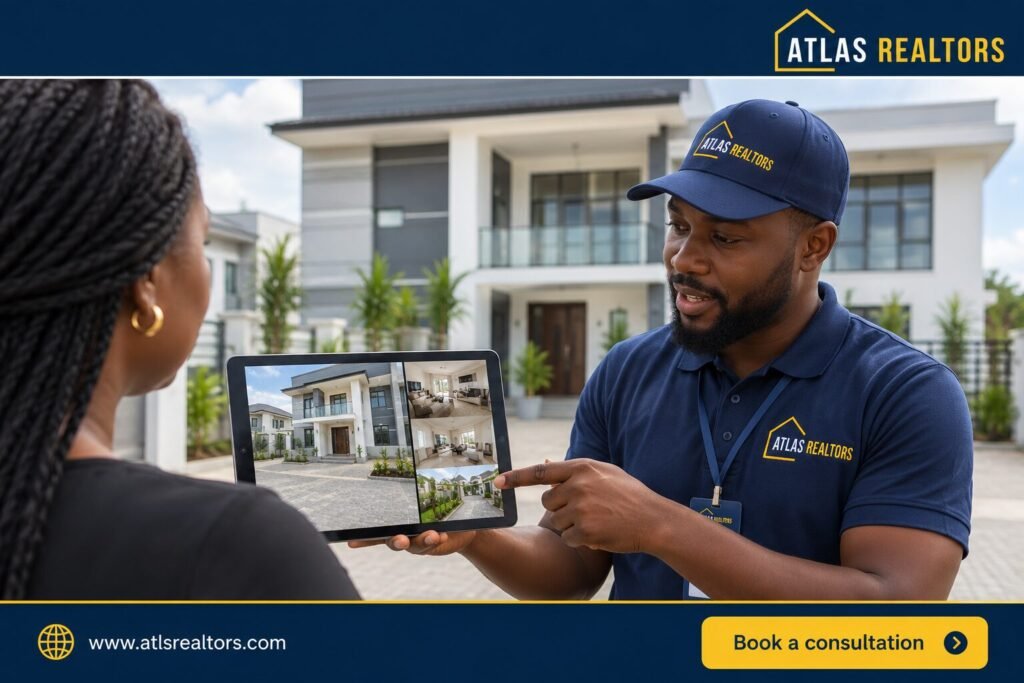
ATLAS Realtors was built specifically around the diaspora buyer’s reality: you’re investing in Lagos land while living a life thousands of miles away, and you need someone who treats your property the way you would if you were still here. As a CAC-registered brokerage operating under Atlas Real Estate Broker Ltd, and registered with SCUML for compliance with Nigeria’s anti-money laundering framework, ATLAS Realtors isn’t an informal arrangement between you and a family friend, it’s a documented, accountable business relationship.
That accountability is what makes remote monitoring actually work. Instead of relying on one caretaker’s word, you get scheduled site visits, dated photo and video evidence, and a real estate consultant in Lagos who reports directly to you on a fixed timeline. Whether your interest is in a single plot or a broader diaspora real estate investment Nigeria strategy across multiple properties, the same monitoring discipline applies. As your Lagos Real Estate Realtor, ATLAS Realtors treats the after-purchase relationship as seriously as the purchase itself which is the part most agents quietly skip.
If you haven’t had eyes on your property in the last twelve months, the most useful next step is simple: Book a Consultation and let ATLAS Realtors carry out an independent site visit so you know exactly where things stand, with documentation you can actually rely on.
Frequently Asked Questions
These are the questions diaspora owners ask most often once they realize how much time has passed since they last had eyes on their property. If your situation raises a question not covered here, that’s usually a sign it’s specific enough to warrant a direct conversation rather than a general answer.